
What is a Graft?
A Graft is a generated package for calling a module through Graftcode. It presents types and members derived from the module's analyzed callable surface. Application code imports the package and uses generated classes and methods; the generated code initializes the Hypertube runtime bridge and sends the invocation to the configured execution context.
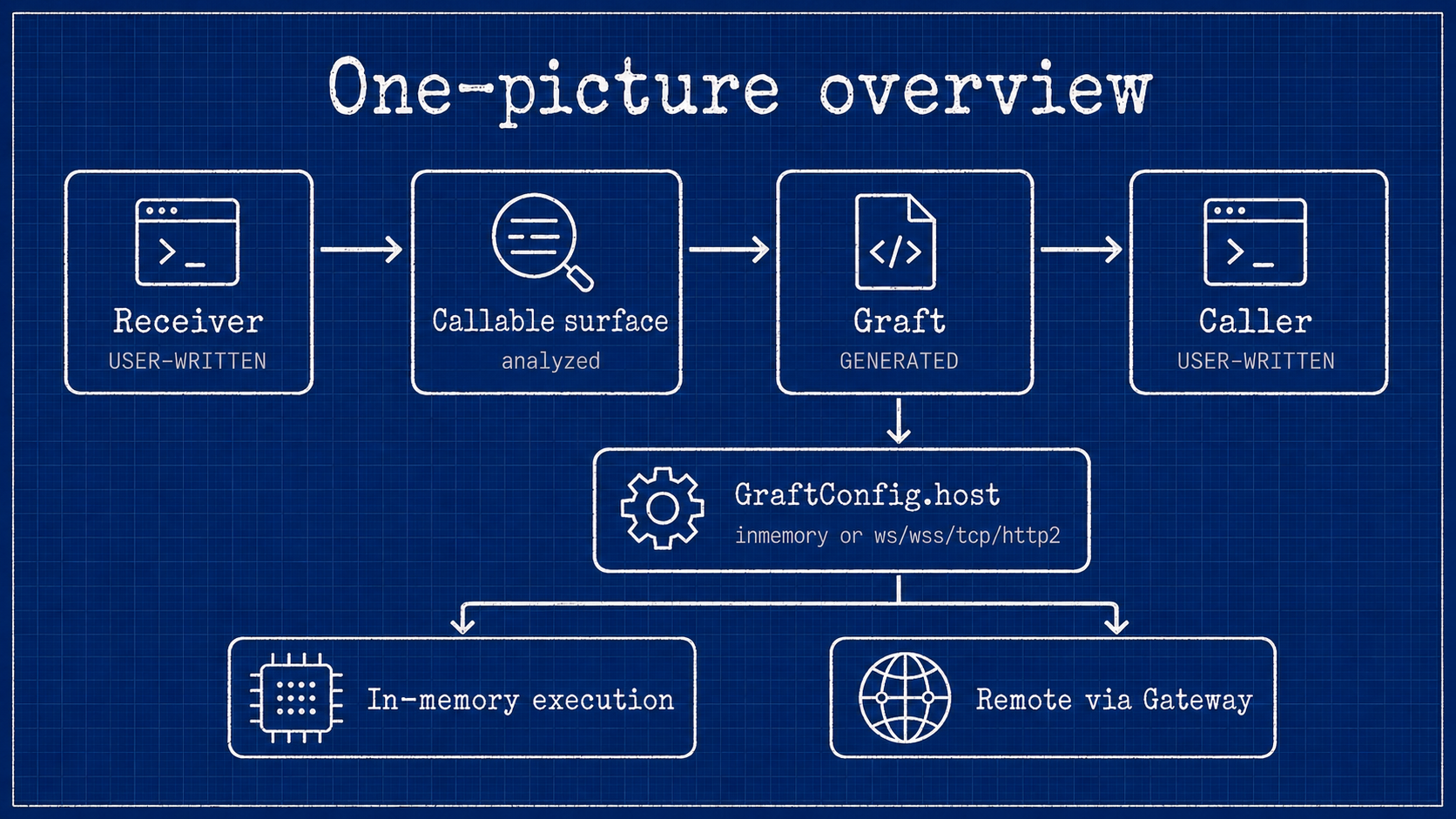
The four parts
- You expose a Receiver module with an intentional public surface.
- Gateway captures the selected callable surface.
- The Graftcode Engine uses that callable-surface metadata to build a Graft for a target package ecosystem.
- At runtime, the installed Graft resolves configuration and invokes the hosted or in-memory module.
The module implementation and the consuming application are user-written. The wrapper, configuration class, and invocation plumbing inside a Graft are generated.
What a Graft is not
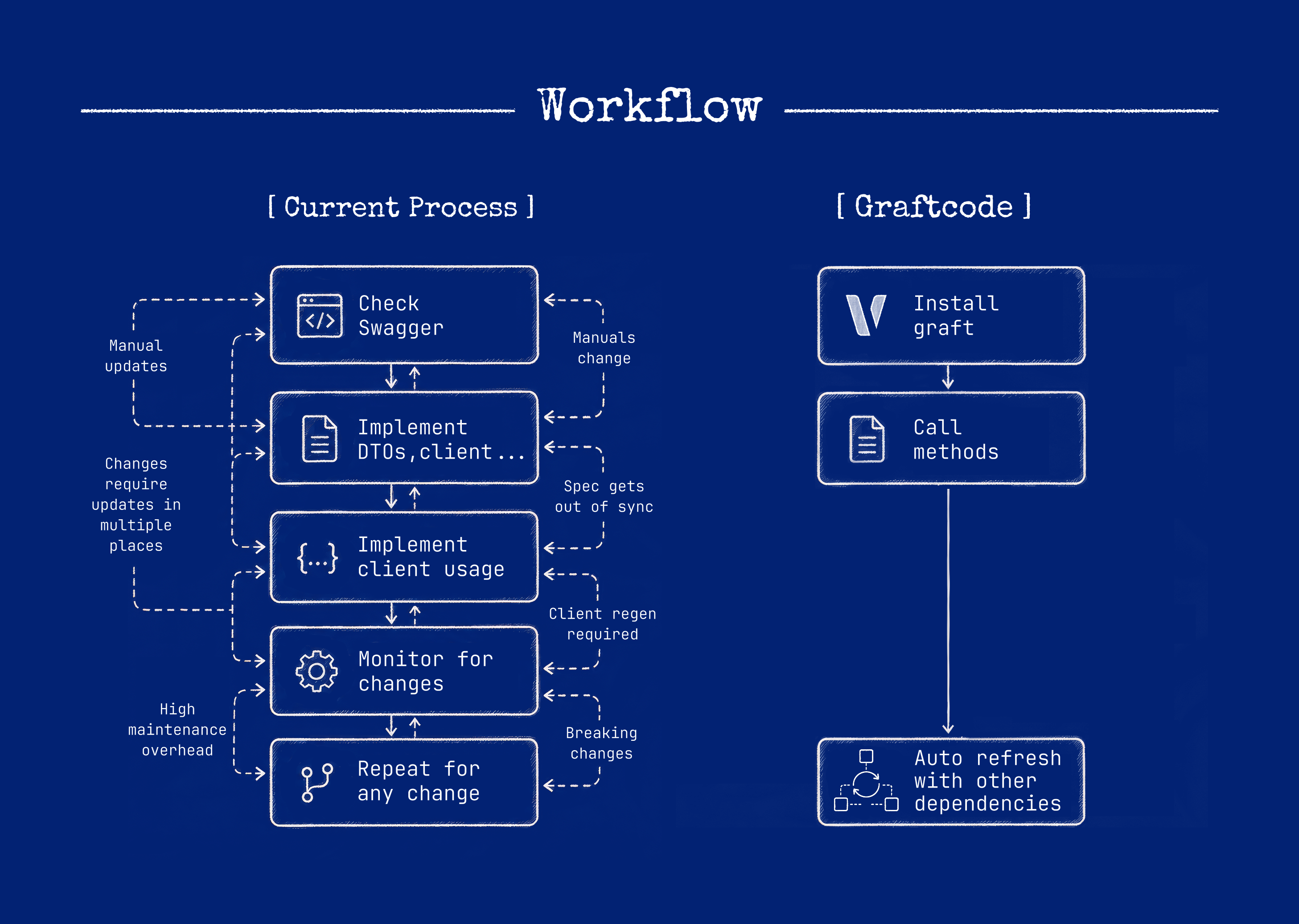
A Graft is not the hosted implementation, the Gateway, or a copy of the Receiver's code. It is also not a manually maintained HTTP SDK. Its shape is generated from the Receiver's callable surface, while its runtime behavior depends on resolved configuration.
Build time and runtime
Package generation and invocation are separate:
- Build/package time: select the callable surface and generate a package.
- Application build time: restore the package and type-check or compile calls.
- Runtime: resolve the Graft configuration, initialize a runtime context, transport the command, execute the module, and return a result or error.
Scope
This does not imply that every source-language type can be mapped to every target language; see Type mapping.
Next: Callable surface, Package generation, and Invocation lifecycle.